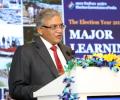
Kumar, who played a key role in implementing decisions following the abrogation of Article 370 of the Constitution in Jammu and Kashmir during his stint in the Union home ministry, took charge as an election commissioner on March 15, 2024.
Tamil Nadu Chief Minister M K Stalin has announced the formation of a panel headed by a retired Supreme Court judge to study the relationship between the Union and state governments and ensure state autonomy. The panel, which will submit its interim report in January 2026 and its final report in two years, will examine the transfer of subjects from the State List to the Concurrent List, citing the National Eligibility-cum-Entrance Test (NEET) as an example of a subject outside state purview.

Justice Khanna, who will serve as CJI for a little over six months, will demit office on May 13, 2025.
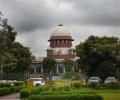
The Supreme Court of India will likely hear a batch of petitions challenging the constitutional validity of the Waqf (Amendment) Act, 2025 on April 15. The Act, which came into force on April 8, has been met with widespread criticism from various stakeholders, including politicians, the All India Muslim Personal Law Board (AIMPLB), and Jamiat Ulama-i-Hind. They argue that the law is discriminatory and violates the fundamental rights guaranteed under Articles 25 and 26 of the Constitution. The petitions allege that the amendments give the government more control over the administration of Waqf, effectively sidelining the Muslim minority from managing their own religious endowments.
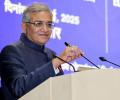
As an IAS officer in Kerala, Gyanesh Kumar -- who the Congress described as Amit Shah's 'right hand man' -- had a good working equation with the state's Congress and Left leaders.

Bhimrao Ramji Ambedkar, the architect of the Indian Constitution, is also credited with the creation of the Election Commission of India. An amendment he brought to the Constituent Assembly led to the establishment of the Election Commission as an independent body responsible for conducting elections. Ambedkar's amendment consolidated election authority into a centralized body, headed by a chief election commissioner appointed by the President, rather than separate commissions for the Centre and states. This article delves into the historical context and the importance of Ambedkar's contribution in establishing the Election Commission of India.

Four-time Odisha MP Pinaki Misra's wedding to firebrand TMC MP Mahua Moitra in a quiet, intimate ceremony that chose privacy and tradition over fanfare, was a reflection of his personal style.

Punjab farmer leader Jagjit Singh Dallewal has ended his hunger strike which he began on November 26, 2022, to press for various demands of agitating farmers including a legal guarantee on the minimum support price (MSP) for crops. The announcement came after appeals from Union Agriculture Minister Shivraj Singh Chouhan and Union Minister of State for Railways Ravneet Singh Bittu. Dallewal said he would continue to fight for the MSP guarantee and other demands.

Section 6A, which was incorporated in the Citizenship Act 1955 following the signing of the 1985 Assam Accord, was upheld by the Supreme Court.

Several opposition MPs, who had previously criticized former Rajya Sabha chairman Jagdeep Dhankhar, are now praising him following his sudden resignation, with some even requesting him to reconsider.

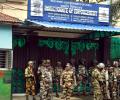
The Supreme Court of India has repeatedly criticized the Enforcement Directorate (ED) for exceeding its authority and misusing its powers. The latest rebuke came on Thursday, when the court accused the agency of 'crossing all limits' in a money laundering probe against a Tamil Nadu state-run liquor retailer. This follows a string of similar observations by the Supreme Court and high courts across India, raising concerns about the ED's investigative practices and the potential for misuse of its powers.

Chief Justice of India DY Chandrachud has set in motion the process of appointment of his successor by recommending to the Centre the name of senior-most Supreme Court judge Justice Sanjiv Khanna.
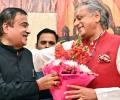
Senior Congress leader Shashi Tharoor welcomed the extradition of Tahawwur Hussain Rana, a key accused in the 26/11 case, and said everyone associated with the conspiracy of the Mumbai terror attacks must face the court of justice. He described Rana's extradition as a "step forward for justice." Rana, a Pakistan-born Canadian national and close associate of David Coleman Headley, is being brought to India after his last-ditch attempt to evade extradition failed. Tharoor expressed hope that the interrogation of Rana would provide more details about the Mumbai attacks and said he was "very glad" that Indian authorities managed to get Rana's custody.

The Congress party has claimed credit for the extradition of Tahawwur Rana, an accused in the 2008 Mumbai terror attacks, from the US, saying the Modi government did not initiate the process and merely benefited from the "mature, consistent and strategic diplomacy" begun under the UPA. Former Home Minister P Chidambaram said the government did not secure any breakthrough to make the extradition possible, nor is it the result of any grandstanding. He added that it was a testament to what the Indian state can achieve when diplomacy, law enforcement and international cooperation are pursued sincerely and without any kind of chest-thumping. Chidambaram detailed the UPA government's efforts in securing Rana's extradition, citing the registration of a case against him in 2009, diplomatic pressure on Canada and the US, and continued efforts despite legal setbacks. He highlighted the role of the UPA in securing Rana's conviction for other terrorism-related offences and the cooperation between the US and Indian agencies in gathering evidence and securing his extradition. The Congress leader further stated that it was the UPA's groundwork that paved the way for Rana's extradition, even after the change in government in 2014.
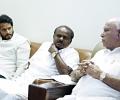
The Supreme Court referred to a larger bench the legal issues stemming from a plea of BJP leader B S Yediyurappa, including the question whether a prior sanction to prosecute is needed under the Prevention of Corruption Act after a magisterial court order of inquiry. The questions revolve around the interplay between the provisions of the Prevention of Corruption Act and the Code of Criminal Procedure on the issue of prior sanction to prosecute a public servant.
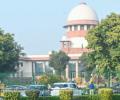
The Supreme Court on Wednesday deprecated the practice of announcing freebies prior to elections, and said people were not willing to work as they were getting free ration and money.

The Supreme Court of India has directed the President to consider the mercy petition of Balwant Singh Rajoana, a death row convict in the 1995 assassination case of former Punjab Chief Minister Beant Singh. The court gave the President two weeks to decide on the plea. Rajoana was sentenced to death in July 2007 for his role in the bombing that killed Beant Singh and 16 others. The Shiromani Gurdwara Parbandhak Committee (SGPC) filed a mercy petition on his behalf in 2012.

The solicitor general said the suit is also liable to be dismissed due to the absence of cause of action against the respondent -- department of personnel and training.
The Mathura Shahi Masjid Eidgah Committee has approached the Supreme Court, requesting the court to prevent the central government from filing a response to a petition challenging the Places of Worship Act's constitutional validity. The committee accuses the BJP-led government of intentionally delaying its response. The court had previously issued a notice to the government in March 2021, but the government has yet to submit its reply despite numerous opportunities. The committee argues that the government's delay is intended to obstruct those opposing the challenge to the Places of Worship Act from filing their own responses. The petition also states that the pleas challenging the law's validity are scheduled for hearing on February 17, and closing the government's right to respond would serve justice. The Supreme Court previously issued a ruling in December 2022 that stopped courts from entertaining new lawsuits or issuing interim or final orders regarding the reclaiming of religious places, particularly mosques and dargahs. The ruling halted proceedings in 18 lawsuits filed by Hindu groups seeking surveys to confirm the original religious character of 10 mosques, including the Gyanvapi Masjid in Varanasi, the Shahi Idgah Masjid in Mathura, and the Shahi Jama Masjid in Sambhal. This decision was made in response to six petitions, including one filed by lawyer Ashwini Upadhyay, challenging various provisions of the Places of Worship Act. The 1991 law prohibits the conversion of places of worship and guarantees the preservation of their existing religious character as it stood on August 15, 1947. Notably, the dispute regarding the Ram Janmabhoomi-Babri Masjid in Ayodhya was excluded from this law. There are also several cross-petitions advocating for a strict enforcement of the 1991 law to uphold communal harmony and maintain the current status of mosques that Hindu groups seek to reclaim, claiming they were temples before being destroyed by invaders.
The report, according to the sources, states that the HC did not get the note of the Supreme Court collegium on the issue even after six months.

Manas Sood, a Class 12 student from the Delhi Public School, has distributed 2,650 boxes of Tax City Education and empowered over 12,000 students from 52 schools across India. His aim? To help young Indians understand taxes and become financially literate.

The Supreme Court of India on Tuesday questioned the issue of using "spyware against terrorists" and stated that any report touching upon the country's "security and sovereignty" won't be made public. The court indicated it might address individual concerns regarding privacy breaches, but the report of the technical committee would not be a document for public discussion. The court will examine the extent to which the report can be shared publicly. The court's statement came during a hearing on a petition related to the alleged use of Pegasus spyware for surveillance. The court also emphasized that "having spyware is not wrong, against whom you are using is the question" and that the security of the nation cannot be compromised. The hearing has been adjourned to July 30.

The Supreme Court on Friday said the plea seeking a policy for verification of electronic voting machines should go before the same bench that delivered a verdict in April rejecting the demand for bringing back the old paper ballots.

The revised salaries of MPs are significantly lower than the salaries drawn by top bureaucrats in the country.
The Supreme Court of India has formed a National Task Force (NTF) to address the growing concern of student suicides in higher educational institutions. The court took note of the recurring cases and directed Delhi Police to register FIRs on the complaints of families of two students who died by suicide at IIT Delhi in 2023. The NTF, chaired by former apex court judge Justice S Ravindra Bhat, will prepare a comprehensive report, including the identification of causes leading to suicides, analysis of existing regulations, and recommendations for strengthening protections. The NTF will also have the authority to conduct surprise inspections of higher educational institutions and make further recommendations to ensure a holistic approach to addressing mental health concerns and eliminating suicides.
The Supreme Court of India has stayed a Lokpal order that allowed complaints to be filed against a sitting high court judge. The court termed the order "something very, very disturbing" and a concern for the independence of the judiciary. The bench issued notices to the Centre, the Lokpal registrar, and the complainant, directing them to keep the identity of the judge confidential. The court will hear the matter again on March 18.
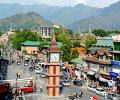
'Often people outside paint a wrong picture of us of Kashmiris. We are not like that. We are cool and bindaas,' said the lady, a teacher, caressing my cheeks in the pressing crowds.

The Supreme Court of India has transferred a Public Interest Litigation (PIL) concerning the safety and longevity of bridges in Bihar to the Patna High Court. The court expressed concern over the state government's handling of bridge collapses, noting that officials were suspended after incidents but reinstated after the public outcry subsided. The court also criticized the state's voluminous response to the PIL, which lacked explanations for the collapses. The Patna High Court will now monitor the state's efforts to ensure structural and safety audits of bridges in Bihar.

"From time to time, complaints are received in the Department of Justice (in the law ministry) against sitting as well as retired judges of Supreme Court and high courts. Department of Justice is concerned only with the appointment and service conditions of the sitting judges of the Supreme Court and high courts," he said.

Bukhari said party president Mehbooba Mufti was scheduled to address various workers' conventions as part of her ongoing public outreach programme over the next few days.
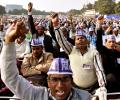
'All of these guys who are opposing the Supreme Court judgment are from dominant scheduled caste communities and none of them come from the scavenging community.' 'Not a single scavenging leader will oppose this Supreme Court judgment.'

Their shared brief: To assert India's case with clarity, rebut hostile narratives, and secure enduring partnerships for global counter-terror cooperation.

When the government chooses to either ignore or use identity documents only when it suits them, it shakes people's sense of stability, notes Shyam G Menon.
It will be court's opinion versus the legislative power to enact law, the Supreme Court on Wednesday said as it posted the pleas challenging the appointment of the chief election commissioner and election commissioners under the 2023 law on February 4.

The Central Bureau of Investigation (CBI) has sent a judicial request to the United States seeking information from private investigator Michael Hershman, who has claimed to possess crucial details about the Rs 64-crore Bofors bribery scandal of the 1980s. Hershman, the head of the Fairfax Group, had previously expressed his willingness to share information with Indian agencies, alleging that the investigation into the scam was derailed by the then Congress government. The CBI's request comes after previous attempts to obtain information from US authorities yielded no results. This move highlights the continued efforts to uncover the truth behind the decades-old scandal, which has had a significant impact on Indian politics.
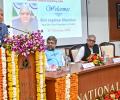
Vice President Jagdeep Dhankhar has questioned the Chief Justice of India's involvement in executive appointments, specifically citing the selection of the CBI director. He believes this practice undermines democratic principles and calls for revisiting the existing norms. Dhankhar also raised concerns about the "doctrine of basic structure", suggesting it has a debatable jurisprudential basis. He emphasized the importance of each institution operating within its constitutional boundaries and highlighted the need for coordinated autonomy. The vice president also discussed the need for a balanced approach to judicial review and the importance of judges focusing on judgments rather than other forms of expression. He stressed the need to revisit the current state of affairs to restore the judiciary's sublimity.

She also pointed out that the poor from villages are afraid to go to court.

The fresh application has been filed by Zahoor Ahmad Bhat, an academician, and Khurshaid Ahmad Malik, a socio-political activist, in Jammu and Kashmir seeking restoration of statehood.

The Supreme Court on Monday upheld the government's decision to abrogate Article 370 of the Constitution, which bestowed a special status on the erstwhile state of Jammu and Kashmir, and said steps should be taken to conduct the election to the Assembly in the Union Territory by September 30 next year.
 © 2026 Rediff.com - Advertise with us - Disclaimer - Privacy Policy - Sitemap - Feedback - About us - Terms of use - Grievances